


Rijiju Slams Opposition for Politicising Anti-Paper Leak Bill
Parliamentary Affairs Minister says discussion should have focused on strengthening exam integrity instead of political speeches, urges constructive debate on legislation.
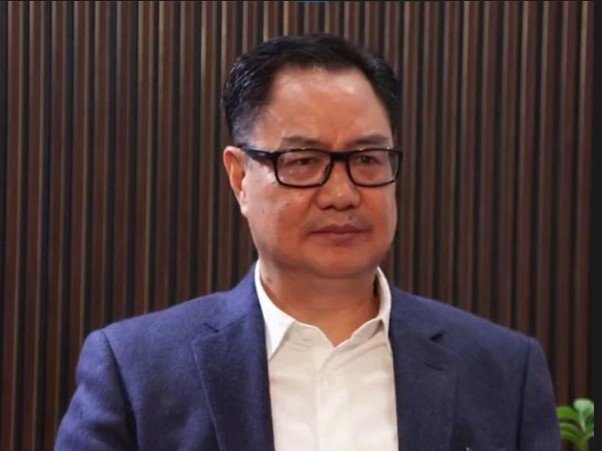
NEW DELHI, Jul 28: Union Parliamentary Affairs Minister Kiren Rijiju on Tuesday criticised the Congress and other opposition parties for allegedly avoiding a substantive discussion on the Public Examination (Prevention of Unfair Means) Amendment Bill, 2026, accusing them of turning an important legislative debate into a political confrontation.
The remarks came as the Lok Sabha resumed business after nearly a week of disruptions, allowing the much-awaited debate on the anti-paper leak legislation to begin. The government projected the proposed amendments as a significant step towards restoring the credibility of public examinations and ensuring that deserving students are protected from organised malpractice.
Government Pushes Stronger Legal Framework
Opening the debate in the House, Union Minister of State in the Prime Minister’s Office Jitendra Singh said the amendment bill strengthens the legal framework introduced in 2024 to tackle examination fraud across the country.
He described the legislation as part of the Narendra Modi government’s broader commitment to safeguarding merit and fairness in competitive examinations. According to Singh, the amended law introduces tougher provisions against organised paper leak syndicates and seeks to improve accountability among institutions conducting public examinations.
The government has maintained that recurring incidents of paper leaks have adversely affected millions of students, making stricter legal safeguards an urgent necessity.
Rijiju Criticises Opposition’s Approach
Speaking to reporters outside Parliament, Rijiju expressed disappointment over the manner in which the discussion unfolded, alleging that opposition members concentrated on political criticism instead of analysing the provisions contained in the legislation.
According to him, parliamentary debates should examine the strengths and weaknesses of proposed laws rather than becoming platforms for political speeches.
He said lawmakers should have discussed the bill’s mechanisms, implementation strategy and legal provisions aimed at preventing examination-related irregularities. Such a debate, he argued, would have been more meaningful for students and the education system.
Rijiju claimed that while MPs belonging to the BJP and its National Democratic Alliance (NDA) allies explained various aspects of the legislation, members from the Congress and other opposition parties failed to engage with its substantive provisions.
Opposition Raises Student Protest Issue
The opposition, however, adopted a different approach during the debate by highlighting the government’s handling of recent student protests against examination irregularities.
Several opposition leaders criticised the alleged use of force against demonstrators, arguing that the government’s response to protesting students had damaged its credibility.
They contended that every instance of police action against young protesters reflected poorly on the administration and shifted attention away from the genuine concerns being raised over examination reforms.
Opposition members maintained that protecting students’ rights should remain central to any discussion on examination reforms.
Priyanka Gandhi Questions Bill’s Effectiveness
Congress MP Priyanka Gandhi Vadra questioned whether the proposed amendments contained sufficient measures to genuinely safeguard the interests of students.
Responding to her criticism, Rijiju said meaningful suggestions could only emerge if opposition parties participated in a detailed discussion of the legislation itself.
He stated that Parliament is the appropriate forum for constructive criticism and welcomed recommendations that could strengthen the proposed law.
According to Rijiju, merely criticising the government without examining the bill’s provisions does little to improve legislation.
Call for Constructive Parliamentary Debate
The Parliamentary Affairs Minister emphasised that parliamentary proceedings should focus on evaluating legislative proposals on their merits rather than allowing political disagreements to dominate discussions.
He reiterated that opposition parties are fully entitled to point out shortcomings, recommend amendments and offer alternative approaches. However, he said those suggestions must be based on the actual contents of the bill rather than political rhetoric.
Rijiju stressed that healthy parliamentary democracy depends on informed debate and careful scrutiny of proposed legislation.
Anti-Paper Leak Law Aims to Restore Confidence
The amendment bill is intended to reinforce the existing legal framework designed to combat organised cheating, paper leaks and examination fraud. The government believes stronger penalties, tighter procedures and enhanced investigative powers will help restore public confidence in recruitment and entrance examinations.
The legislation assumes added significance in the wake of several high-profile examination controversies that have sparked nationwide protests and raised concerns about transparency in the country’s examination system.
With Parliament now debating the proposed amendments, the government hopes the legislation will emerge as a stronger legal instrument to deter organised malpractice and protect the future of millions of students appearing in competitive examinations across India.

