


Trump says Iran has accepted “almost all” U.S. conditions in nuclear talks
US President Donald Trump claims Tehran is close to agreeing on key American demands, while insisting the central aim of negotiations remains the dismantling of Iran’s nuclear ambitions amid ongoing military pressure and indirect diplomacy in Doha.
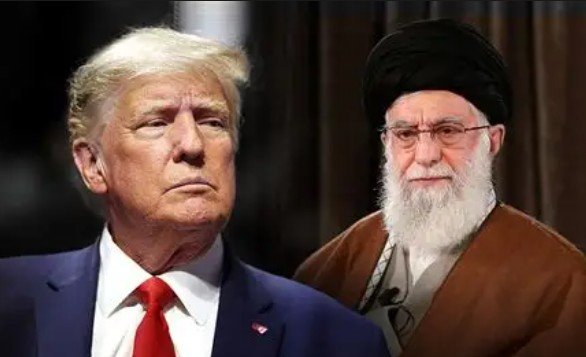
Washington DC: US President Donald Trump has claimed that Iran has agreed to nearly all of Washington’s core demands in the ongoing diplomatic engagement, projecting confidence that a deal could be within reach even as tensions remain high over Tehran’s nuclear programme and the wider military confrontation in the region.
In an interview with CNBC, Trump said the talks were progressing in a direction favourable to the United States and suggested that the broad contours of an understanding had already been accepted by the Iranian side. While stopping short of announcing a final breakthrough, he struck an upbeat note about the state of the negotiations and said the administration’s principal objective remained unchanged: ensuring that Iran is permanently prevented from acquiring a nuclear weapon.
“I think they’ve agreed to just about everything we need,” Trump said, presenting the current phase of diplomacy as part of a wider US strategy aimed at stripping Tehran of any pathway to nuclear capability.
The US president framed the talks not as a conventional peace process but as an extension of a coercive campaign that combines military pressure, strategic deterrence and negotiations. According to Trump, the diplomatic track is inseparable from Washington’s effort to force Iran into accepting strict limits on its nuclear programme after months of confrontation and repeated strikes.
“We’re in the war, and it’s really the denuclearisation of Iran. This is not a war per se. This is the denuking of Iran. You can’t let them have a nuclear weapon,” he said.
Trump’s remarks came as American and Iranian representatives continue indirect negotiations with the support of regional mediators, even as the fallout from recent hostilities continues to reshape the political and security environment across West Asia. The latest round of contacts, held in Doha, focused on the fragile interim arrangement that paused active fighting in June and laid out a framework for further discussions over Iran’s nuclear future, sanctions, and broader security guarantees.
Trump projects strength as diplomacy continues
The US president used the interview to underscore what he described as America’s overwhelming military and strategic leverage over Tehran. He argued that Iran had been left badly weakened by recent American action and claimed the Islamic Republic no longer possessed the conventional capabilities it once relied upon to challenge US interests or threaten regional shipping routes.
Reflecting on the impact of military operations, Trump asserted that Iranian defence infrastructure had been devastated and that the country’s chain of command had been repeatedly disrupted.
“I ripped their military apart. They have no navy, they have no air force, they have no radar, their leaders are all dead. And they elect — not elect — they raise new leaders. They’re all dead also. We’re on the third set of leaders, and we actually get along with them,” he said.
The comments were among Trump’s most sweeping claims yet about the extent of damage inflicted on Iran during the recent confrontation. While such assertions could not be independently verified in full, they reflect the administration’s effort to portray Tehran as strategically cornered and therefore more willing to concede on issues it had previously resisted, particularly on uranium enrichment, verification mechanisms, missile oversight and regional security behaviour.
Trump also maintained that the United States had already secured a decisive military advantage and warned that any residual capabilities retained by Iran could still be neutralised if Washington chose to escalate further. He cited a series of strikes carried out over multiple nights in response to what he described as Iranian provocations, including drone activity targeting shipping.
“I’ve defeated them militarily. They’re totally defeated militarily. They have some missiles left, we could wipe them out too. And I hit them three times last week very hard because they sent a drone into a ship, I hit them. Then they did something else, and I hit them. I hit them three nights in a row, the week before I hit them two nights in a row, very hard. And we’re negotiating, and we’ll see whether or not. I think they’ve agreed to just about everything we need,” Trump said.
The president’s repeated emphasis on military dominance appeared designed to send two messages at once: to reassure domestic and allied audiences that Washington was negotiating from a position of strength, and to remind Tehran that the diplomatic channel remains open only so long as it aligns with American red lines.
Nuclear issue remains central to US strategy
Throughout his remarks, Trump returned to the nuclear file as the defining issue in the confrontation with Iran. He has repeatedly argued that Tehran cannot be allowed to reach a point where it can either build or credibly threaten to build a nuclear weapon, and his latest comments suggest the administration is seeking a deal that goes beyond a temporary pause and instead imposes durable restrictions.
Although the precise details under discussion have not been made public, US officials have indicated that the administration wants verifiable curbs on Iran’s nuclear infrastructure, including strict monitoring of facilities, transparency over stockpiles and mechanisms to prevent any rapid breakout capability. Trump’s language suggests he views the current negotiations as a means of locking in gains made through military pressure rather than merely stabilising the situation.
He later reinforced that position while speaking to reporters in Washington, saying the process of “denuclearisation” was progressing well and that talks had yielded encouraging signs.
“The denuclearisation of Iran is moving along well,” Trump said, adding that both sides had held “very good meetings”.
Vice President JD Vance also signalled that the nuclear question would remain at the heart of any future arrangement. Speaking separately, Vance said the administration’s focus was fixed on ensuring that Tehran’s atomic programme is brought under meaningful control.
“Obviously, we’re worried about the nuclear issue, we’re going to start talking about that,” Vance told reporters, indicating that the administration sees the current phase as one in which military de-escalation and nuclear restrictions are being linked together in a structured diplomatic process.
Taken together, the comments from Trump and Vance suggest the White House wants to create the impression that it has forced Iran into a narrower negotiating box — one where Tehran must either accept tighter limits or risk renewed confrontation.
Trump links military pressure to economic collapse in Iran
Alongside his claims about battlefield gains, Trump also painted a bleak picture of Iran’s economic condition, arguing that the country’s financial distress has further weakened its negotiating hand. According to the US president, years of sanctions and the latest phase of conflict have left Tehran struggling with inflation, shrinking revenues and mounting shortages.
He said Iran’s economy had been pushed to the brink and claimed the country would eventually need external assistance to stabilise food supplies and essential imports. Trump went so far as to suggest that American farmers could end up supplying major agricultural commodities to Iran if a final agreement is reached and relations move onto a more transactional footing.
“We have the great Navy, the greatest navy in the world. These guys are unbelievable. Not one ship got through to Iran. They have 300% inflation, they’re making no money. So we’re going to take some of the money, and we’re going to buy them. They need food. They need corn, and wheat, and soybeans, and we’re going to have exclusively our American farmers provide that. Assuming we get to the position where we should get to. I think we’re going to get there,” Trump said.
The remarks reflected Trump’s long-standing preference for presenting foreign policy in commercial as well as strategic terms. In his telling, a future agreement with Iran would not only secure American security interests but also create economic openings for US producers. That framing may appeal to domestic constituencies, especially farming communities, but it also underscores how the administration is blending sanctions, military coercion and trade leverage into a single negotiating posture.
President disputes narrative that Iran emerged stronger
Trump also used the interview to attack media assessments suggesting that Iran may have weathered the conflict better than Washington claims. In particular, he criticised a report that argued Tehran was in a stronger position now than before the latest military escalation, dismissing that conclusion as detached from the scale of damage suffered by Iranian institutions and command structures.
“The New York Times said the other day that Iran is in better position now than it was four months ago. I said, wait a minute, their military is gone. Their inflation is up to 300% from 5%. Their leaders are gone. Their second row of leaders are gone. Some of their third row of leaders are gone. Their generals are mostly wiped out. But they said that they are in better shape today than they were four months ago, before we attacked,” Trump said.
His criticism was consistent with a broader White House messaging campaign aimed at countering any narrative that the military campaign had failed to change Iranian behaviour. For Trump, the value of the operation lies not only in the physical damage inflicted but in its ability to compel Tehran back to the table under less favourable circumstances.
At the same time, such rhetoric carries risks. By portraying Iran as both defeated and on the verge of accepting US terms, the administration raises expectations for a sweeping agreement. If talks stall or collapse, the White House could face questions about whether its public confidence outpaced the actual progress being made behind closed doors.
Trump details covert naval pressure and radar strikes
In one of the most striking parts of the interview, Trump described what he said were stealth naval operations and repeated strikes on Iranian radar installations. According to the president, American forces spent weeks moving assets in a way designed to avoid detection, before targeting air-defence and surveillance systems that Iran was attempting to rebuild after earlier attacks.
He suggested that the destruction of radar infrastructure had left Iran blind in key sectors and unable to effectively track maritime movements or prepare defensive responses. Trump portrayed the strikes as part of a sustained campaign to keep Iran off balance and prevent it from restoring military coherence.
“We did something nobody knew. Every night, we were taking ships out through the South, which is the furthest point from where they have their little weapons, and they were going along the coast with no lights for a month and a half,” Trump said.
He added: “We blew up Iran’s radar, they had no radar, they still don’t. We blew it up again the other night. They had a nice new radar, they were all set to go, and we blew it up last week. They have to start all over again for a third time.”
If accurate, such operations would indicate that Washington has been pursuing a campaign of repeated degradation rather than a single punitive strike. The strategic logic would be to prevent Iran from regaining confidence, impose constant rebuilding costs, and reinforce the idea that any military recovery remains vulnerable to immediate disruption.
Doha talks continue, but no final breakthrough yet
Trump’s comments came roughly a day after another round of indirect US-Iran discussions in Doha, Qatar, where mediators have been working to keep both sides engaged despite deep mistrust and the volatility created by recent violence. According to reports emerging from the talks, negotiators did not announce a final breakthrough or long-term settlement. Instead, the focus remained on refining the terms of the interim arrangement reached two weeks earlier and clarifying the next steps for a broader diplomatic package.
The Doha process has become one of the principal channels through which Washington and Tehran are testing whether a temporary cessation of hostilities can be turned into a more durable understanding. The current framework reportedly deals with immediate de-escalation measures while leaving the most contentious issues including the exact scope of nuclear restrictions, enforcement mechanisms, sanctions relief and sequencing of obligations for further negotiation.
Qatar’s Foreign Ministry has indicated that discussions produced positive movement on the memorandum that helped pause active warfare in June. That document is understood to build on a previous framework discussed in Switzerland, where mediators sought to establish a path from battlefield de-escalation to structured political talks.
However, the diplomatic track now faces a pause. Qatari officials said the next round of discussions would be deferred until after the funeral processions for Iran’s late Supreme Leader Ayatollah Ali Khamenei, who is scheduled to be buried on July 9. The mourning period is expected to shape the political atmosphere in Tehran and could influence the timing and tone of the next phase of negotiations.
A spokesperson for Qatar’s Foreign Ministry said the latest contacts had generated constructive momentum around the ceasefire memorandum and that mediation efforts would continue once the immediate ceremonial period in Iran concludes.
Talks proceed through intermediaries
Official updates from Doha indicate that the American and Iranian delegations did not hold direct face-to-face negotiations, with mediators relaying messages between the two sides. That structure reflects the continuing political sensitivity of the talks and the difficulty both governments face in openly engaging one another after months of military confrontation and long years of hostility.
According to diplomatic updates, the discussions were conducted through separate meetings, with Qatari and Pakistani intermediaries helping transmit proposals, clarifications and responses. This indirect format has become a familiar feature of US-Iran diplomacy, allowing both sides to test flexibility while avoiding the domestic and strategic costs of direct public contact.
For Washington, the challenge is to convert military advantage and diplomatic momentum into a binding framework that satisfies its central demand on nuclear restrictions without drawing the United States into an open-ended regional war. For Tehran, the calculation is more complex: it must weigh the need for economic relief and security breathing space against the political cost of appearing to surrender to American pressure.
That tension is why Trump’s confident tone should be read alongside the more cautious signals emerging from the talks themselves. While the US president has projected certainty that Iran is nearing acceptance of Washington’s terms, the diplomatic process still appears to be focused on unresolved details rather than a final, comprehensive settlement.
A fragile opening with major consequences
The current moment may prove pivotal for the future of US-Iran relations and for the wider balance of power in the region. If the negotiations produce a durable arrangement, Trump could claim that a combination of force and diplomacy achieved what years of previous engagement failed to secure: a weakened Iran accepting far-reaching constraints on its nuclear programme under intense external pressure.
But if the process breaks down, the same factors Trump cites as evidence of strength repeated military strikes, aggressive rhetoric, and maximalist public demands — could also deepen mistrust and push the confrontation back toward open conflict. Much will depend on whether the informal understandings reached so far can be translated into a formal mechanism with credible guarantees and clear sequencing.
For now, the White House is presenting the situation as one in which Tehran has little choice but to bend. Trump’s claim that Iran has accepted “just about everything” the United States wants may resonate politically, but the real test will come when negotiators return to the table after the current pause and begin confronting the hardest unresolved issues.
Until then, the Doha track remains active but incomplete, military pressure remains part of the backdrop, and the central question continues to hover over every statement from Washington and Tehran alike: can diplomacy deliver a lasting curb on Iran’s nuclear ambitions before the next round of confrontation begins.

