


India’s Interfaith Wisdom
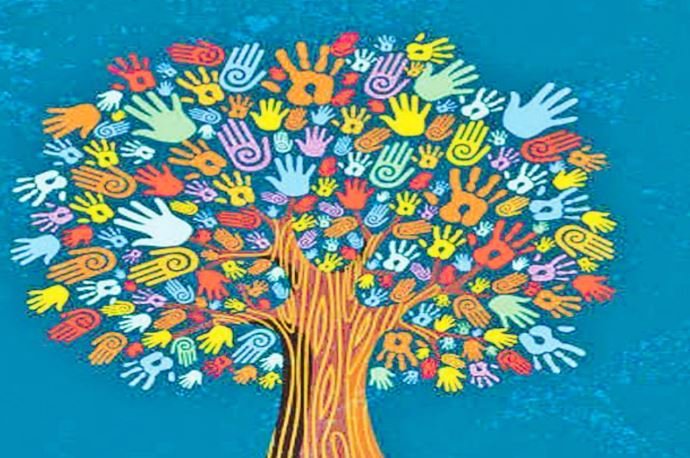
At a time when the world appears more connected by technology but more divided in spirit, the call for interfaith dialogue carries a meaning far deeper than public ceremony. It is a reminder that civilizations are not judged only by their power, wealth or progress, but by their ability to live with difference, respect belief and protect the dignity of every human being. India’s civilizational journey has always rested on this moral strength. It has taught that faith should open the heart, not close the mind.
The Interfaith Dialogue held in Srinagar brought this message into focus with timely relevance. In a world disturbed by conflict, mistrust and identity-based divisions, India’s ancient vision of coexistence offers a healing thought. This vision does not ask communities to forget who they are. It asks them to understand that another person’s faith is not a threat to one’s own. Peace begins when society accepts that truth can be approached through many paths, and that no community has to be diminished for another to feel secure. Sanatana Dharma, with its long and living spiritual tradition, has shaped this understanding in a profound way. Its greatness lies not in domination, but in accommodation. It did not grow by forcing uniformity. It survived and flourished because it allowed diversity to breathe. This is why India became a land where different religions, languages and traditions could find space. Christianity, Islam, Judaism, Zoroastrianism, Buddhism, Jainism, Sikhism and several other streams have added to the Indian experience, not as outsiders to its story, but as living contributors to its civilizational richness. The idea of Bhartiyata, or Indianness, must be understood in this broader sense. It is not a narrow slogan. It is a civilizational character built on shared respect, spiritual openness and cultural confidence. It tells us that unity does not mean sameness. It means the ability of different communities to live together without fear, without hatred and without losing their own identity. This is the essence of Vasudhaiva Kutumbakam, the belief that the world is one family. A family does not survive by making everyone identical. It survives through affection, patience and mutual regard. Jammu and Kashmir has a special place in this conversation. The word Kashmiriyat is often used, but its real strength lies in its deeper connection with Bhartiyata. For centuries, this land has carried the fragrance of many traditions. Shaivism, Buddhism, Sufi thought, Islamic scholarship, Sanskrit learning, folk traditions and poetic expression have all shaped its social and spiritual memory. Kashmiriyat, at its best, is not merely a cultural expression. It is a way of living where faith, compassion and neighbourly trust meet each other in daily life. The arrival of Sufi saints and scholars in India enriched this tradition further. They found here a civilization already familiar with the language of inner truth, devotion and compassion. The meeting of Sufi thought with Indian spiritual traditions created a culture of humility, music, poetry and service. It softened hearts and built bridges where politics often creates walls. This shared spiritual inheritance is one of India’s great gifts to the world. The ancient prayer, “Sarve Bhavantu Sukhinaḥ, Sarve Santu Niramayaḥ,” captures the soul of this civilization. It does not pray for the welfare of one community alone. It seeks happiness and well-being for all. In that single thought lies the moral beauty of India. True spirituality is never selfish. It cannot ask for peace for oneself while denying dignity to another. It must rise above narrowness and embrace the larger human family. Yet, such values cannot remain confined to speeches, books or conferences. Interfaith harmony must be lived in schools, homes, neighbourhoods, religious institutions and public life. Children must learn early that respect for another religion does not weaken their own. Leaders must choose words that heal rather than inflame. Society must resist the temptation to turn faith into a weapon of division. Religion should make human beings kinder, not harsher. The Srinagar dialogue is important because it reminds Jammu and Kashmir of its own civilizational responsibility. This land has seen pain, but it also carries a deep memory of coexistence. Its future cannot be built on suspicion. It must be built on trust, culture, dialogue and the courage to respect difference. If Kashmiriyat is to remain meaningful, it must be practiced as compassion in conduct, not repeated merely as a phrase.
India’s message to the world is simple but powerful. Diversity is not a burden. It is a blessing when guided by respect. Faith is not a wall. It is a window when touched by humility. Dialogue is not weakness. It is the highest form of confidence. In a divided age, the spirit of Bhartiyata and Kashmiriyat can still show that peace is possible, if humanity learns once again to listen, to respect and to live together with dignity. Further, Schools, families, civil society and religious institutions must turn this spirit into daily practice. Regular dialogue, cultural exchanges, value-based education and responsible public speech can strengthen trust, heal old wounds and ensure that harmony becomes a lived social habit.

